Robotic surgery has moved from novelty to routine in many specialties, and AI is beginning to add to it. It is worth separating what is established from what is still emerging, because the field attracts a lot of hype.
Most surgical robots are precision tools controlled by a surgeon. They translate the surgeon's hand movements into smaller, steadier, more precise motions, often through tiny incisions. The benefit is dexterity and control in delicate procedures, which can support quicker recovery. The surgeon is fully in command; the robot is an instrument, not an autonomous operator.
AI is being explored around the edges of surgery rather than at the scalpel itself: helping with pre-operative planning, offering real-time guidance from imaging, analysing recordings to support training, and assisting with documentation of the procedure. These are supportive roles, developing carefully because the stakes could not be higher.
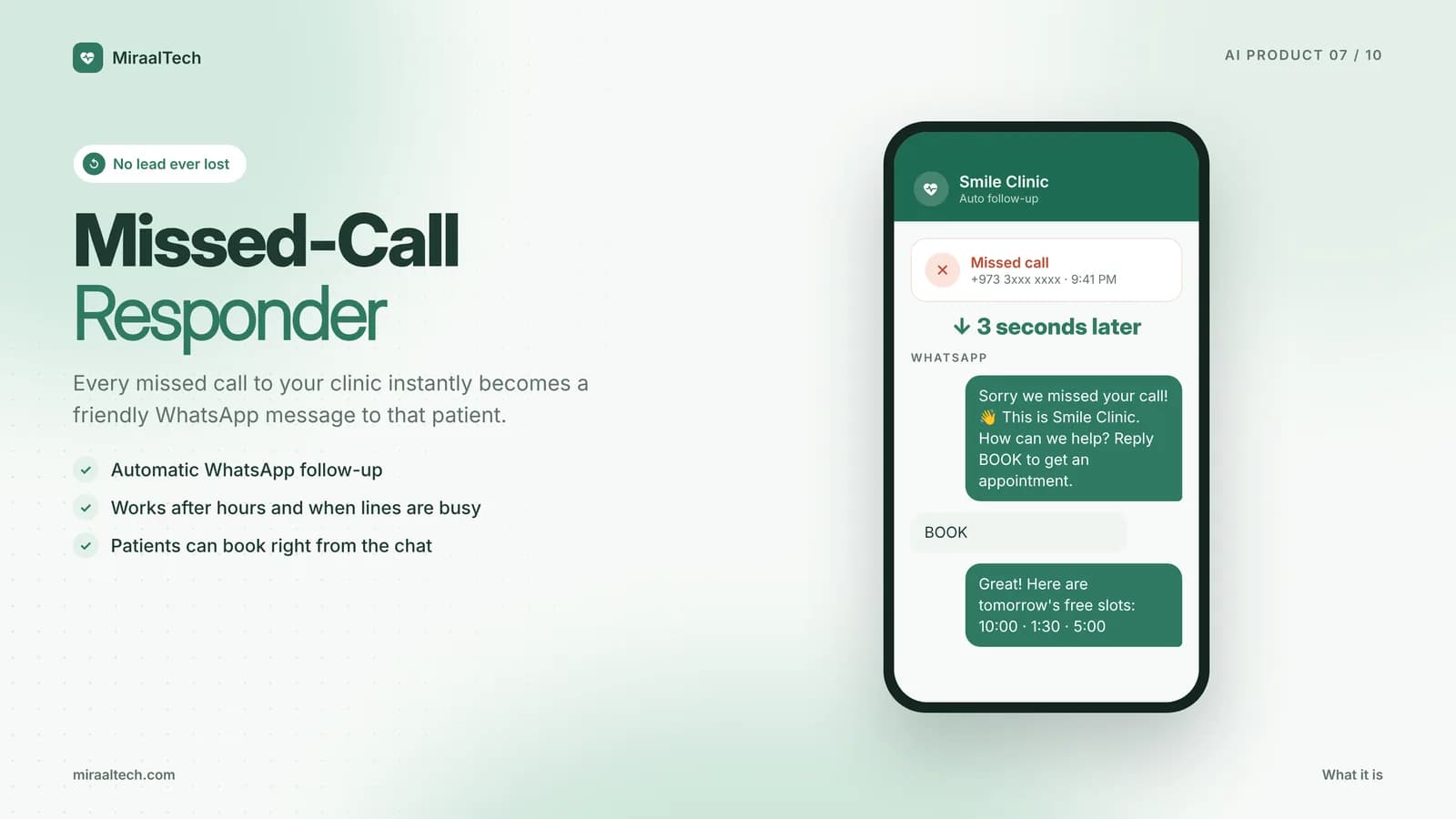
Surgical robotics is a hardware-intensive, heavily regulated, capital-heavy field dominated by specialist manufacturers. It is not something a software house builds, and it is not something a hospital adopts lightly. For most providers, the relevant technology is everything around the procedure: scheduling, records, patient communication, and follow-up, where practical software makes a real day-to-day difference.
Do robots operate on their own?
No. They are controlled by the surgeon; they do not act autonomously.
Is AI performing surgery?
No. AI is being explored in planning, guidance, training, and documentation, not in taking over the operation.
Who builds these systems?
Specialist medical-device manufacturers, under strict regulation.
MiraalTech focuses on the practical software and patient-communication layer around care. Talk to us about streamlining the parts of the journey that surround the procedure.